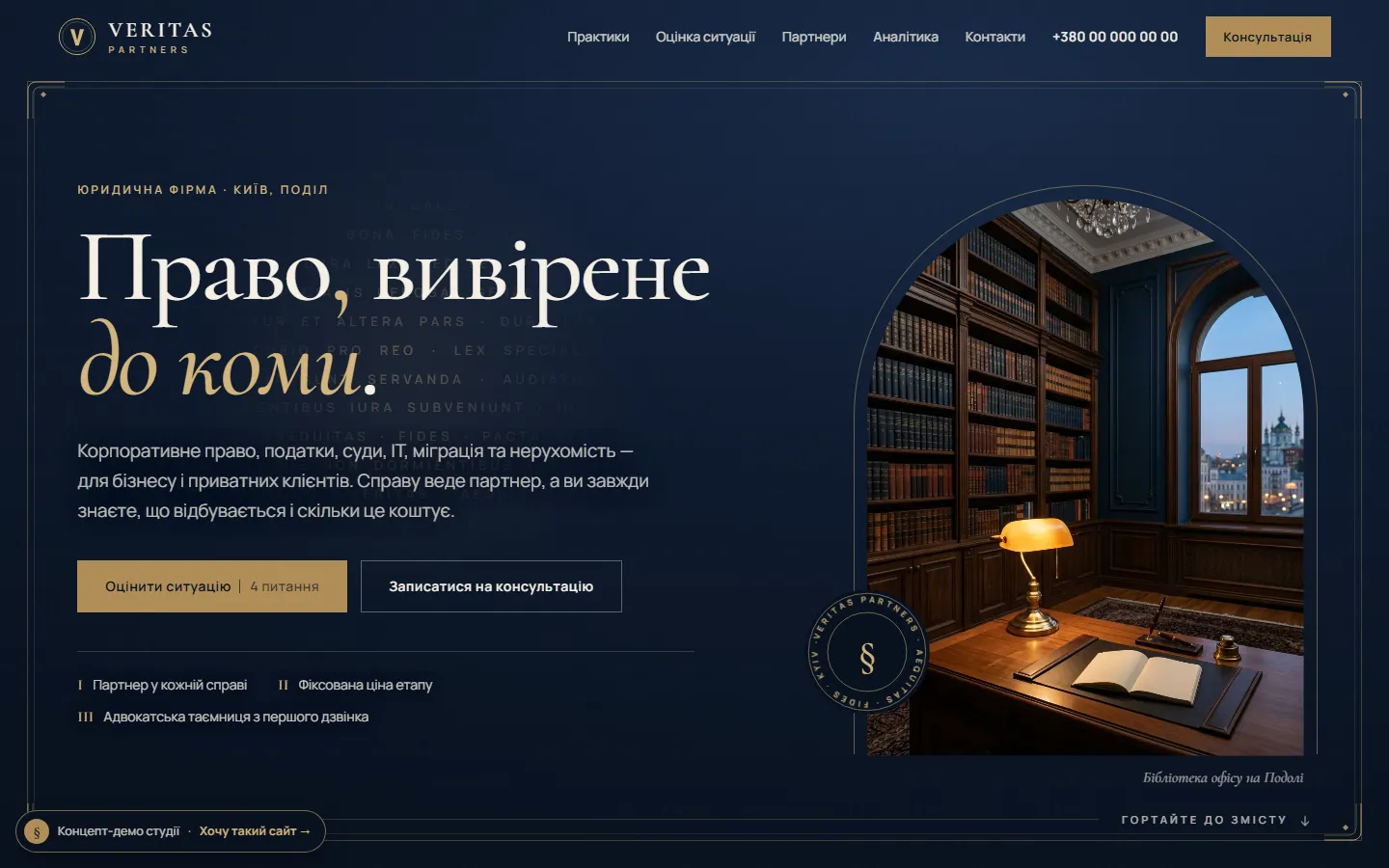
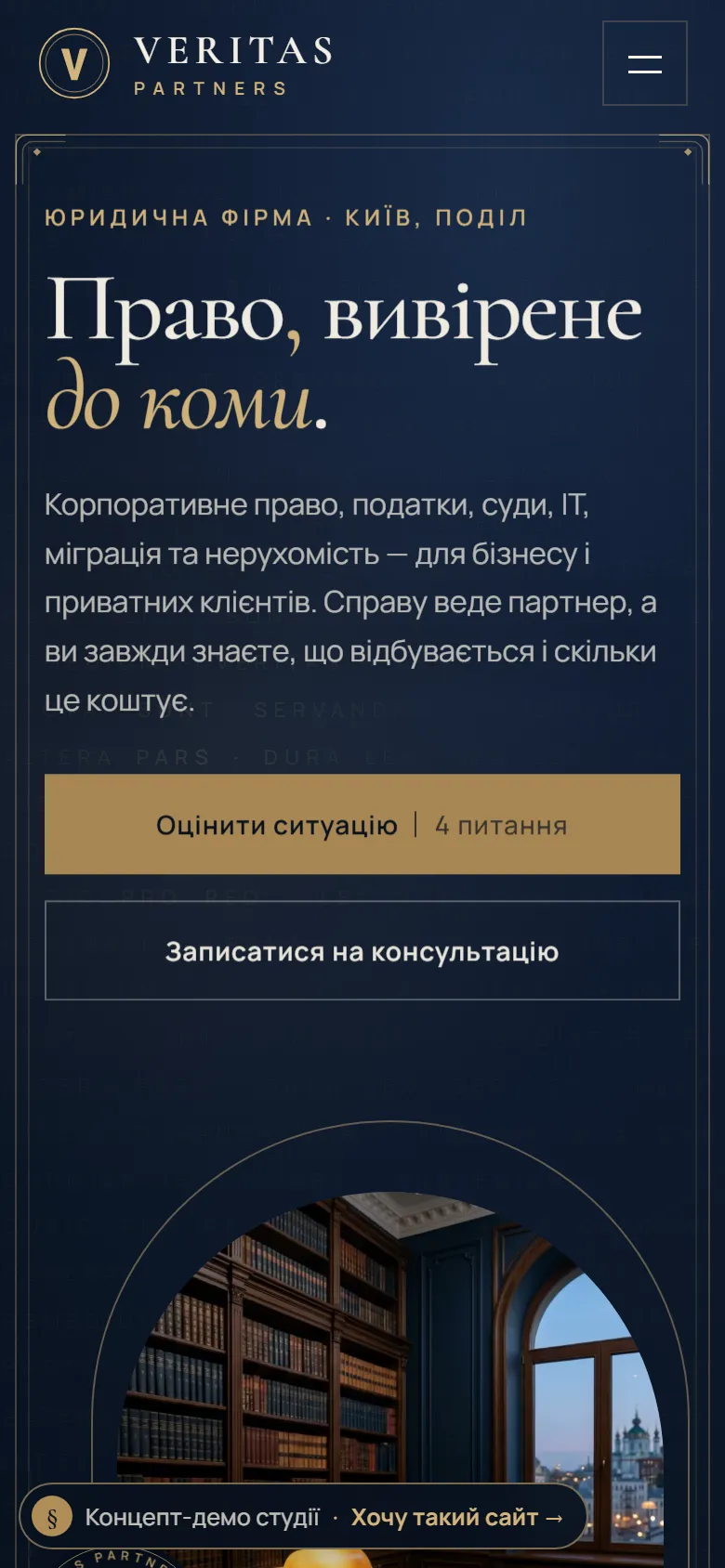
The idea — the Code. The entire site is typeset like a bound legal volume: a cover with a frame and brass corners, a preamble with a table of contents, paragraphs § I–§ VIII, running headers with the section name, margin notes and drop caps. The palette is deep navy, ivory and brass; the typefaces are the classic Cormorant Garamond serif paired with a strict Manrope sans. Old-school feel without the dust: plenty of white space, a precise grid and restrained micro-animations.
A cover that responds to the cursor. The first-screen background holds Latin legal maxims (Pacta sunt servanda, Audiatur et altera pars…), barely visible in the dark. The cursor works like a desk lamp, revealing them in a soft brass circle. Without a cursor the “lamp” drifts on its own; with prefers-reduced-motion the effect is off.
Practice areas that sell. Six expandable blocks: what clients come with, what the firm does, the “from” price and the partner personally responsible. The “Discuss my matter” button pre-fills the practice area in the booking form.
The “Assess your situation” quiz. Four steps — who’s asking, the area, the stage and the urgency — lead to a stamped “preliminary opinion”: the recommended practice and partner, the risk level, the first three steps and a list of documents to bring. The result carries into the request with one click.
Consultation booking. Online or in-office format, topic, a calendar of business days, open slots, phone mask, per-field validation and a confirmation with a request number. Next to it — the fixed consultation fee and the four steps after the request, including a conflict-of-interest check.
Trust without fakes. Instead of “awards” — a confidentiality section (attorney–client privilege, an NDA before the meeting, secure document exchange), partner profiles in modals, insight articles with a filter, and an FAQ that says honestly that nobody can guarantee a win in court.